

How Smart Manufacturing Technologies Are Helping Protect Consumer Products
Product safety is one of the most important priorities for manufacturers, retailers and consumers. Companies involved in production, packaging, storage and distribution must ensure that products are correctly manufactured, identified and tracked throughout their entire lifecycle.
Today, advances in Industry 4.0 technologies, automation, coding, inspection and data management are enabling manufacturers to achieve higher levels of product safety, quality control and traceability.
Product Safety During Production: Internal Traceability
During manufacturing, companies must ensure that production processes are followed correctly and that every product meets the required quality standards.
Modern internal traceability systems automatically monitor and record production activities, reducing reliance on manual processes and allowing manufacturers to react quickly when problems occur.
A well-designed traceability system can:
- Identify production errors immediately
- Prevent non-compliant products from continuing through production
- Support targeted product recalls
- Provide complete production records
- Improve quality control and compliance
Key technologies supporting internal traceability include:
Manufacturing Execution Systems (MES)
MES platforms connect production equipment with factory information systems, providing real-time visibility of production processes, orders, quality data and product history.
Industry 4.0 Connectivity and Smart Automation
Connected machinery, sensors, industrial IoT systems and automation solutions enable continuous monitoring of production performance and quality parameters.
Advanced Coding and Identification Systems
Modern coding systems do much more than print expiry dates and batch numbers. They enable manufacturers to apply and manage:
- Lot and batch information
- Barcodes and 2D codes
- Serial numbers
- Product identification data
- Traceability information across multiple packaging levels
Combined with serialisation and aggregation systems, manufacturers can create a complete digital link between individual products, cases and pallets.
Vision Systems and Product Verification
Vision inspection systems verify that products are correctly identified by checking:
- Presence of printed codes
- Barcode and 2D code readability
- Correct product information
- Print quality and positioning
This helps prevent incorrect products from reaching customers and improves overall quality assurance.
Supply Chain Traceability
Traceability does not end when products leave the factory. Maintaining visibility throughout storage, distribution and retail operations is essential for protecting product integrity.
Sequential traceability systems help monitor the movement of products through the supply chain by connecting information from production, logistics and distribution partners.
Key technologies include:
- Digital traceability platforms
- Automated warehouses
- Product identification systems
- Environmental monitoring sensors
- Serialisation and aggregation solutions
These technologies help manufacturers and supply chain partners improve visibility, reduce risks and respond faster when issues occur.
Connected Products and Consumer Information
Consumers increasingly expect access to more information about the products they purchase.
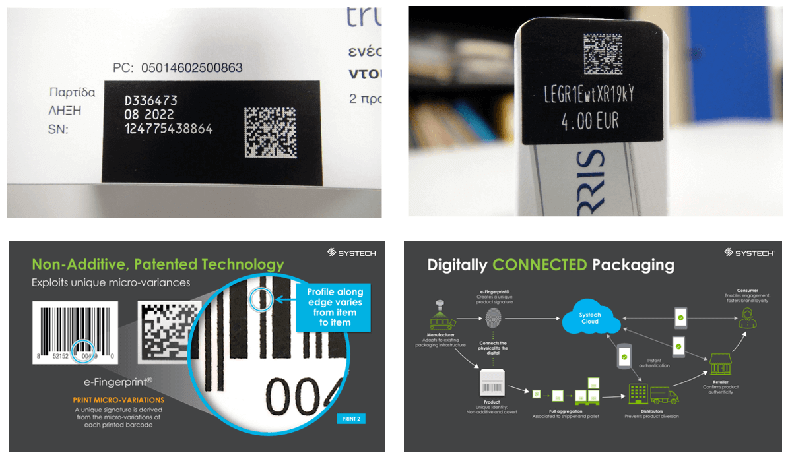
Using smartphones and 2D codes, manufacturers can provide access to digital product information, including:
- Product details
- Origin information
- Sustainability information
- Regulatory information
- Authentication data
- Product-specific traceability information
Technologies such as GS1 Digital Link are enabling manufacturers to create connected products that provide greater transparency while supporting supply chain visibility.
Building Safer, Smarter Production Environments
The future of product safety relies on connected manufacturing systems where coding, inspection, automation and data management work together.
AR Automation helps manufacturers implement technologies including:
- Coding and marking systems
- 2D code printing
- Barcode verification
- Machine vision inspection
- Serialisation and aggregation
- Production line integration
- Industry 4.0 connectivity
By combining these technologies, manufacturers can improve product safety, strengthen traceability and build more efficient Smart Factory environments.
Discuss Your Traceability Requirements
If you are looking to improve product safety, implement traceability systems or prepare your production for Industry 4.0, our specialists can help identify the right solution for your manufacturing environment.
Complete the contact form below and one of our automation specialists will discuss your requirements.